
.
A hernia is the protrusion of an organ or tissue—most commonly bowel—through a weakness or defect in the wall of the cavity in which it normally resides. Groin hernias are the most common type of hernia and include inguinal hernias, which are the most frequent, and femoral hernias, which occur less commonly.
Symptoms are present in approximately two-thirds of individuals and may include pain or discomfort in the groin, particularly with coughing, physical exertion, or straining during bowel movements. A visible or palpable groin bulge is common and typically becomes more prominent with increased intra-abdominal pressure.
The principal complication of concern is strangulation, in which the blood supply to herniated bowel is compromised, leading to ischemia. This usually presents with sudden, severe pain, localized tenderness, and may be associated with systemic symptoms.
Most groin hernias are diagnosed clinically. In selected cases, ultrasound imaging may be used to confirm the diagnosis or to exclude alternative causes of groin pain or swelling.
Asymptomatic groin hernias do not always require immediate surgical repair; however, hernias containing bowel carry a risk of strangulation. If strangulation is suspected, urgent surgical intervention is required. Elective repair may be performed using either open or laparoscopic techniques, typically involving reinforcement of the weakened area with prosthetic mesh (Figure 1 & 2).
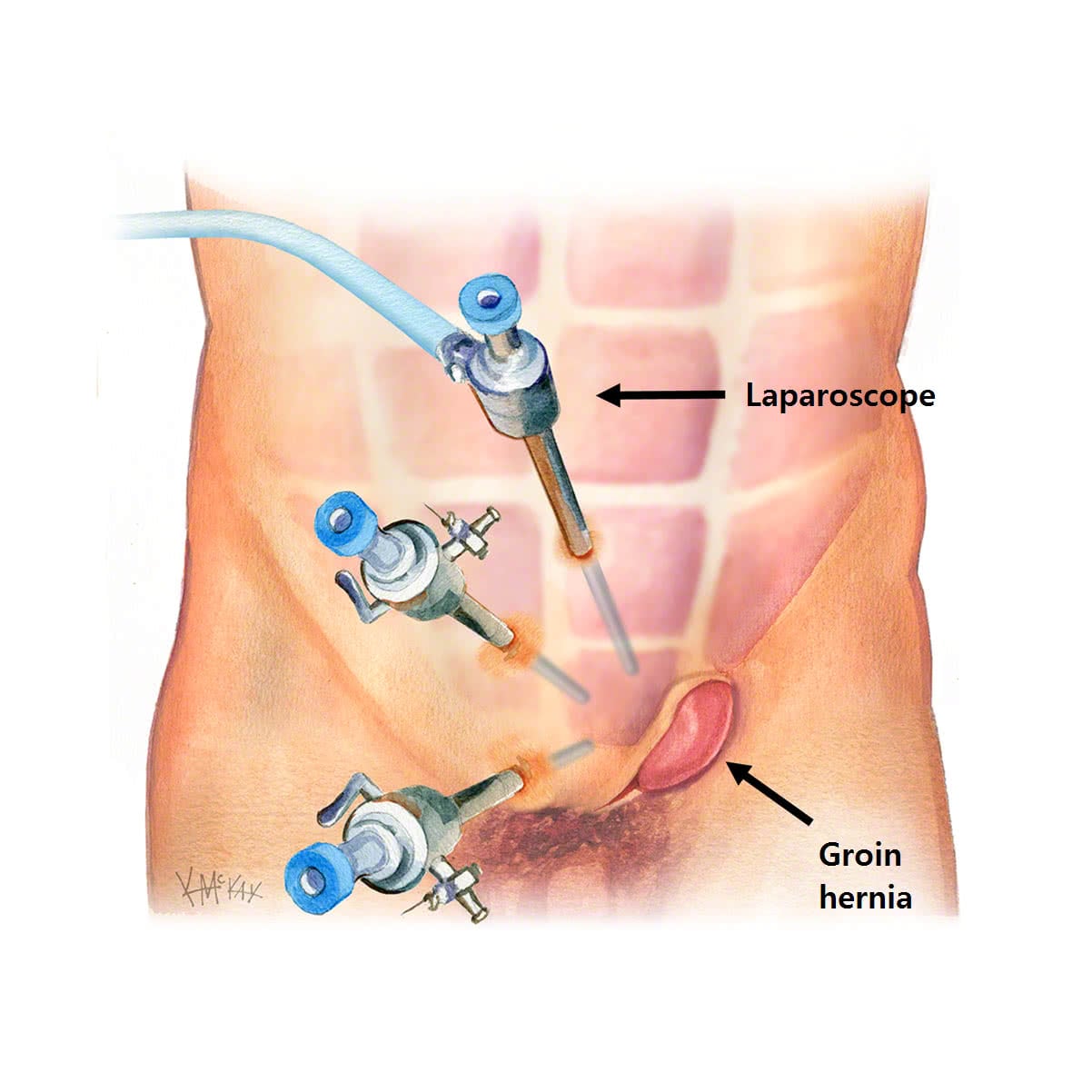
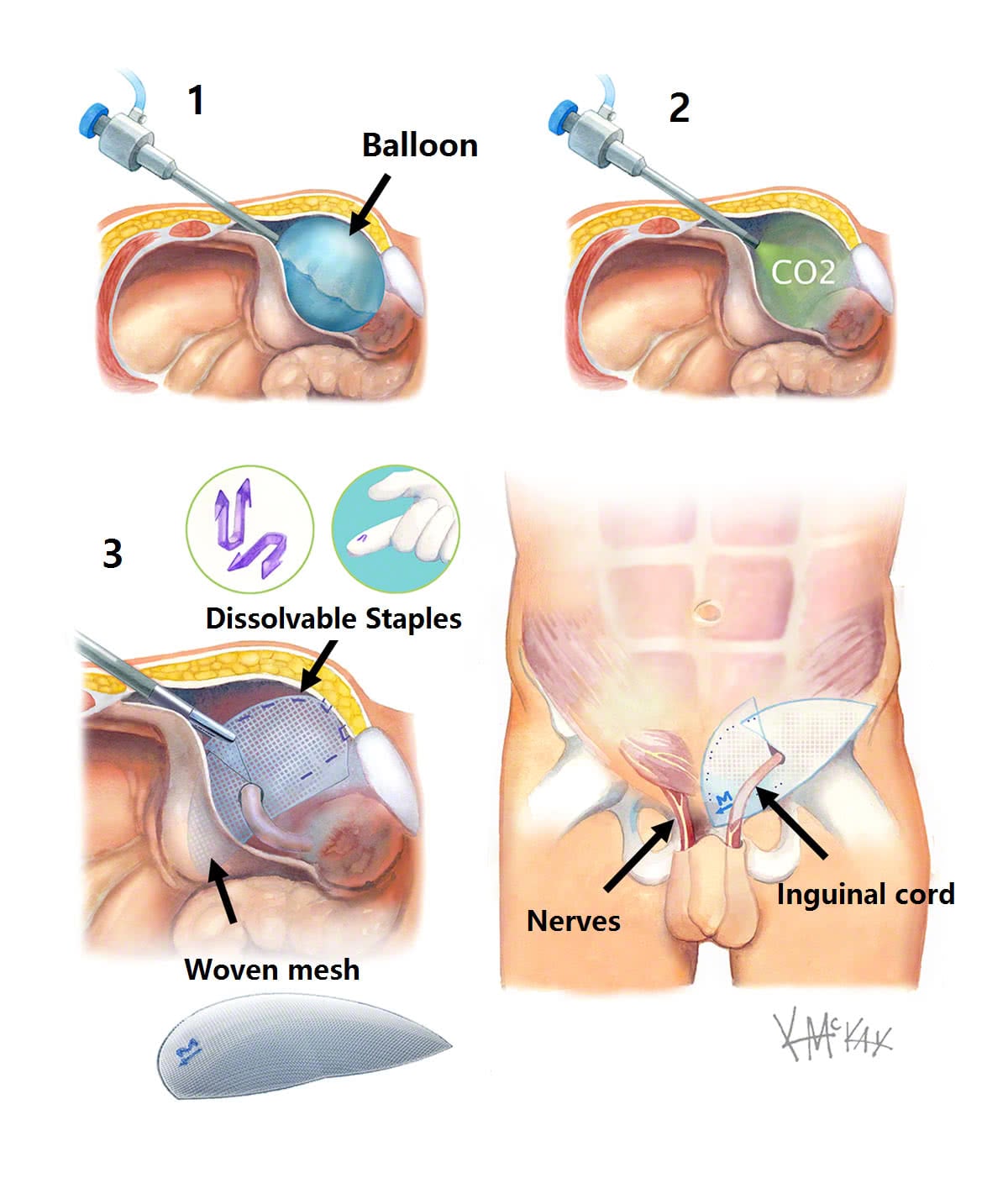
Key-hole (laparoscopic) hernia repair results in less pain than open surgery, allowing for earlier return to usual activities including work.
Why repair hernias?
Open repair may be performed under local or regional anesthesia, which can be advantageous for some patients. Laparoscopic repair is generally associated with reduced postoperative pain and a faster return to normal activities.