
.
Our surgeons are trained in the surgical diagnosis and management of gallstones, including removal of gallbladder when indicated.
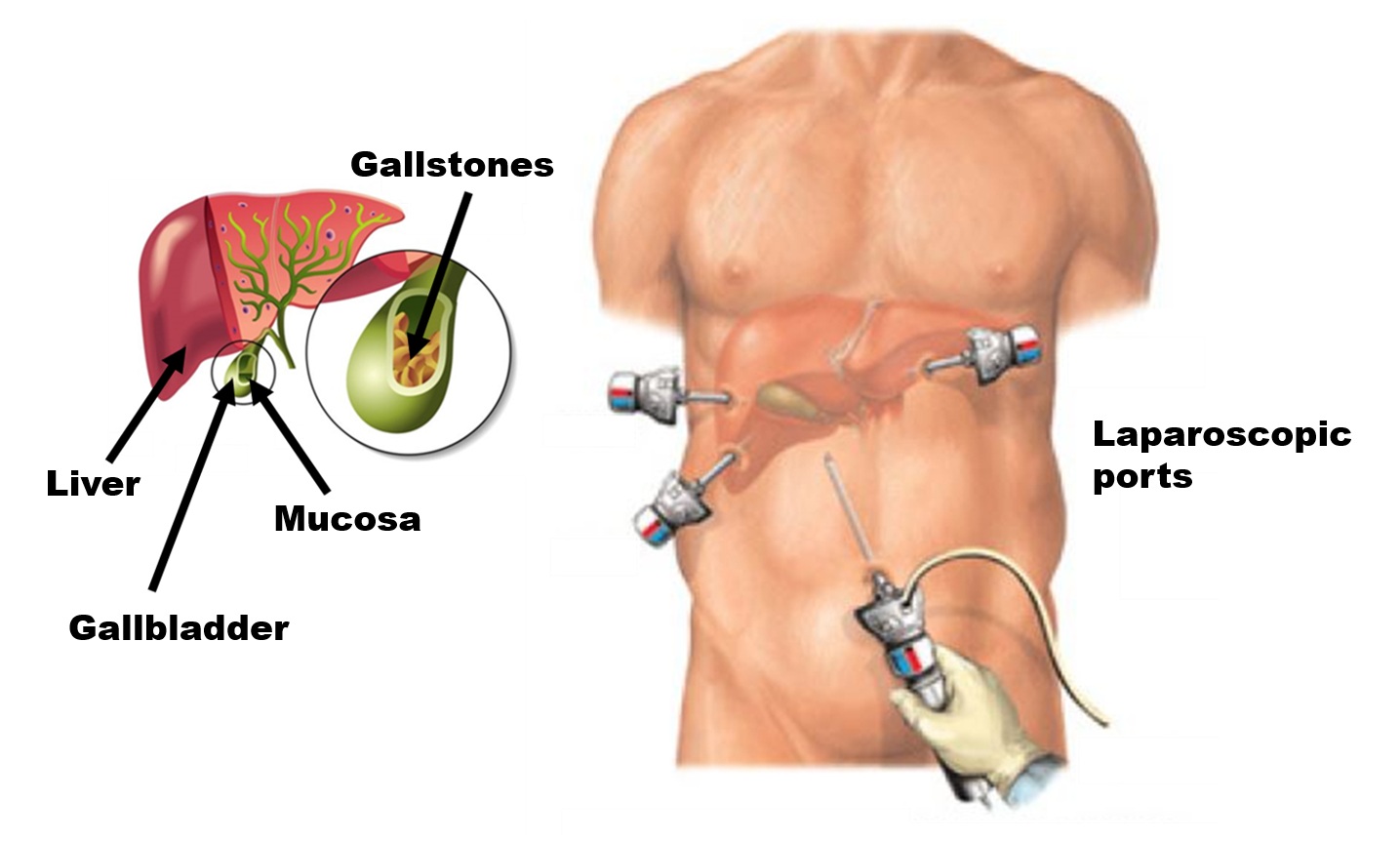
What are gallstones?
Gallstones are hard, pebble-like lumps that form in the gallbladder, a small organ under the liver that stores bile (a digestive fluid that helps break down fats).
Why do gallstones form?
Gallstones develop when bile becomes too concentrated and crystallizes. Over time, these crystals can grow into stones. It is unclear exactly why this happens, but it often involves an imbalance in the substances that make up bile.
Size and number
⦁ They can be as tiny as a grain of sand or as large as a golf ball
⦁ You might have one gallstone or many
Types of gallstones
⦁ Cholesterol gallstones – made mostly from undissolved cholesterol (most common)
⦁ Pigment gallstones – made from bile pigments
Symptoms
⦁ Many people have gallstones without any symptoms
⦁ When symptoms do occur, they may include pain in the upper right abdomen, nausea, or discomfort, especially after fatty meals
Diagnosis
If a doctor suspects gallstones, they usually order an abdominal ultrasound to confirm their presence.
Prevention and lifestyle
Diet doesn’t directly cause or cure gallstones, but:
⦁ Eating a low-fat, low-cholesterol diet
⦁ Choosing foods high in fibre
⦁ Maintaining a healthy weight
may help reduce the risk of gallstones forming or becoming symptomatic.
Indications for surgery
If symptoms appear, it’s important to see a specialist, as complications can occur, and surgery (removal of gallbladder) is generally indicated.