
What are varicose veins?
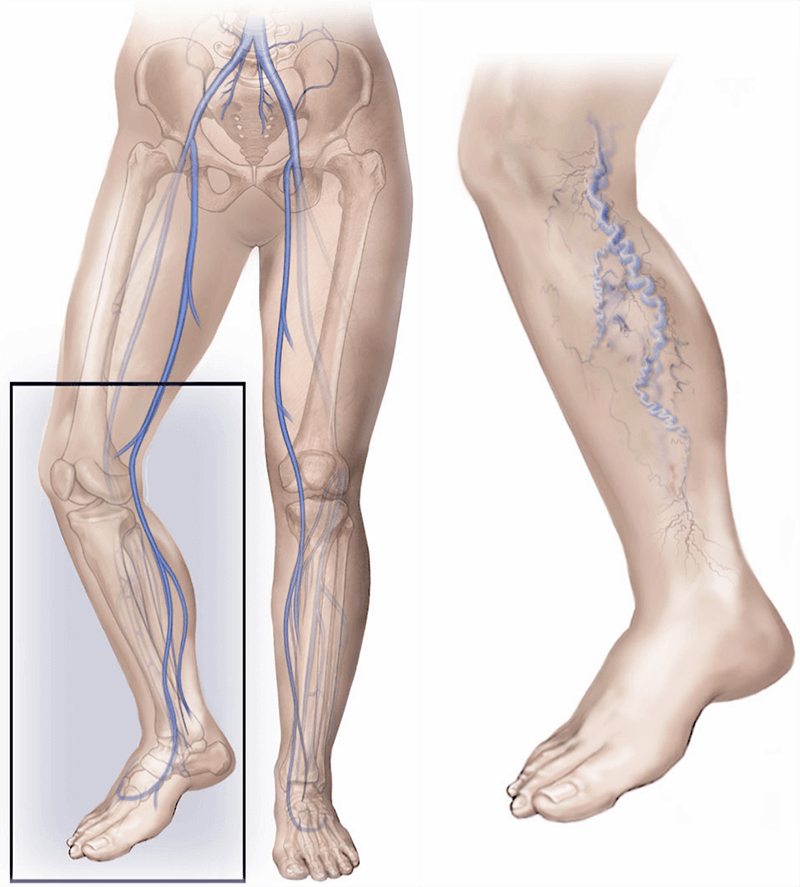
Varicose veins are veins that have become enlarged, stretched and tortuous, most commonly affecting the legs. They often appear raised, bluish or purplish, and may be visible just beneath the skin.
There are two main vein systems in each leg. The deep veins lie within the muscles and carry the majority of blood back towards the heart. The superficial veins sit closer to the surface of the skin. Varicose veins develop in these superficial veins.
A tendency to develop varicose veins often runs in families. They are more common during or after pregnancy and in people who spend long periods standing.
When the vein walls or the small one-way valves inside the superficial veins become weak, blood does not flow efficiently upwards. This leads to increased pressure within the vein. Over time, the vein stretches and becomes swollen and twisted, forming a varicose vein.
What are the benefits of surgery?
Surgical treatment aims to relieve symptoms such as aching, heaviness, swelling, and skin irritation. It may also reduce the likelihood of complications, including inflammation, skin changes, ulceration, or bleeding from the veins.
While surgery can significantly improve symptoms and appearance, it does not prevent new varicose veins from developing in the future.
Are there alternatives to surgery?
Yes. Not everyone requires an operation.
- Compression (support) stockings can help reduce discomfort and swelling and may lower the risk of certain complications.
- Sclerotherapy can be used to seal off affected veins.
- Other minimally invasive treatments may also be suitable depending on the pattern and severity of the veins.
Your surgeon will discuss the most appropriate options based on your symptoms, examination findings, and ultrasound results if performed.