
Plastic reconstruction may be required to restore the appearance and function after the surgical removal of large skin lesions or cancer.
When is Reconstruction Indicated?
In many cases, a skin lesion can be removed and the wound closed directly with sutures. However, reconstruction may be required when:
- The defect is too large to close without tension
- The lesion is located in an area where skin is tight, such as the nose, eyelids, or ears
- Direct closure would distort nearby structures (for example the eyelid, lip, or nostril)
- The surgeon aims to achieve the best cosmetic and functional result
Types of Plastics Reconstruction
Two of the most common methods used are skin grafting and flap reconstruction.
Skin Grafting
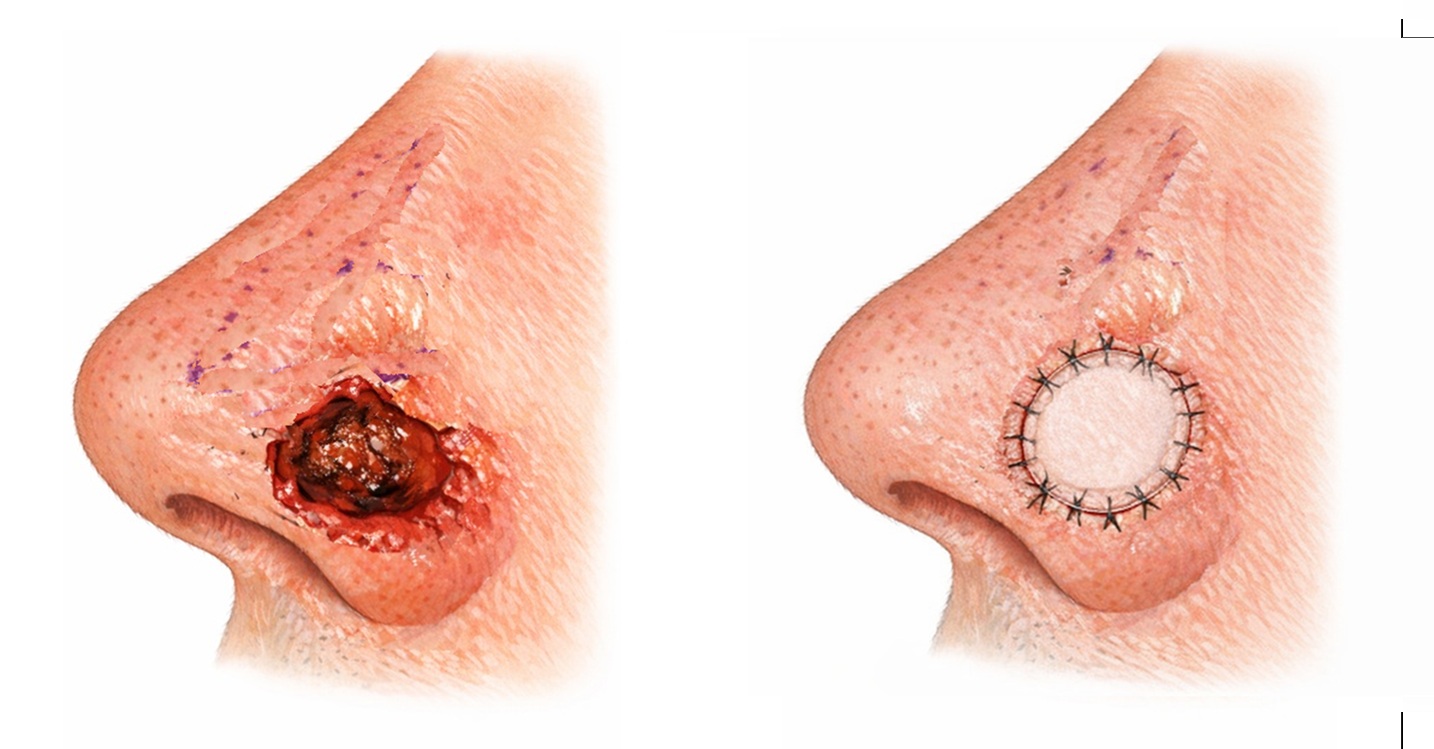
Figure 1. Skin Graft reconstruction.
What Is a Skin Graft?
A skin graft involves taking a thin layer of skin from another part of the body (the donor site) and placing it over the surgical wound.
Common donor sites include:
- Behind the ear
- The neck
- The collarbone region
- The upper thigh
The graft is carefully secured with stitches or a special dressing while it heals.
How Does It Heal?
The graft survives by connecting with the blood supply from the tissue beneath it. This process usually takes about 5–7 days.
During this time:
- A protective dressing is applied
- The graft must remain still and undisturbed
- Your surgeon will review the graft to ensure it has successfully “taken”
Advantages
- Allows coverage of larger defects
- A reliable and relatively straightforward procedure
- Often performed under local anaesthetic
Limitations
Skin grafts may sometimes appear different from the surrounding skin. They can be:
- Lighter in colour
- Slightly shiny or sunken
- More noticeable in highly visible areas such as the nose or face
For this reason, grafts are sometimes avoided in cosmetically sensitive areas if another reconstructive option is suitable.
Flap Reconstruction
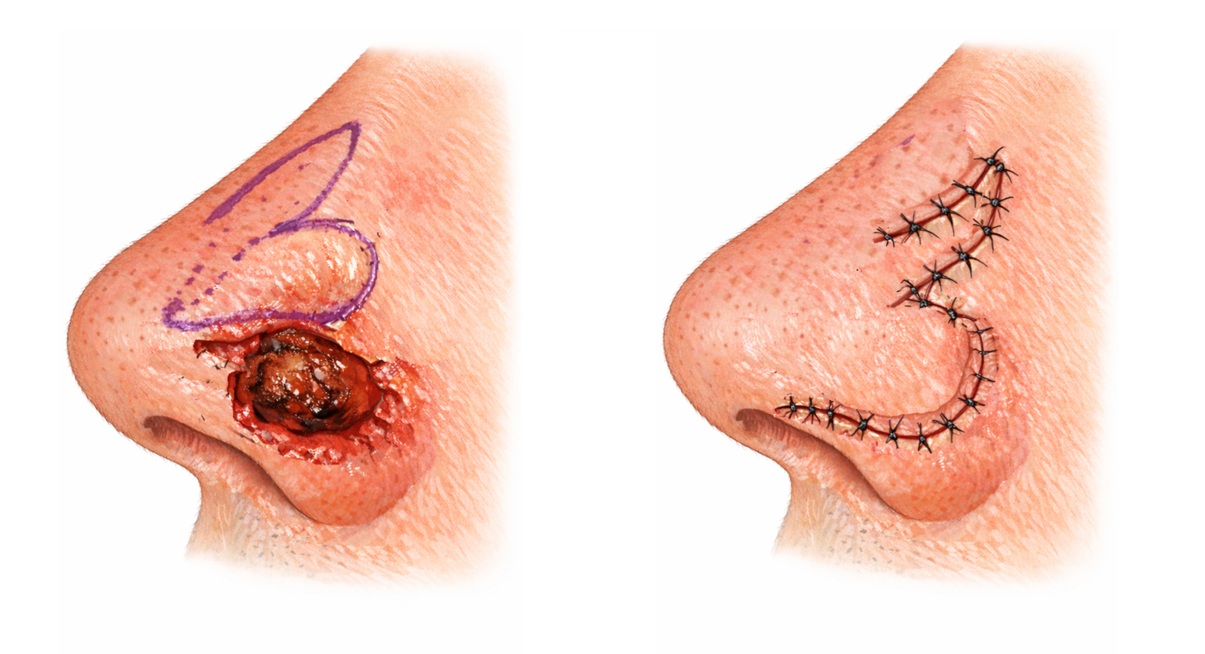
Figure 2. Rotation flap reconstruction
What Is a Flap?
A flap reconstruction uses nearby skin that is partially lifted and moved (rotated or advanced) to cover the surgical defect.
Importantly, the flap remains attached to its original blood supply, which helps ensure reliable healing.
Flap reconstruction is commonly used on the face, where matching the surrounding skin colour and texture is important.
How Does It Work?
The surgeon designs a flap next to the surgical wound and carefully moves it into position. The surrounding skin is then reshaped and stitched to create a natural contour.
Common types of flap movement include:
- Rotation flaps
- Advancement flaps
- Transposition flaps
The choice depends on the size, location, and shape of the defect.
Advantages
- Uses adjacent skin with similar colour and texture
- Often produces a more natural cosmetic result
- Typically blends well with surrounding skin
Limitations
- The procedure can be more technically complex
- The resulting scar may be longer, although it is usually placed along natural skin lines
- Temporary swelling and bruising may occur
What to Expect After Reconstruction
Regardless of which reconstruction method is used, it is normal to experience:
- Mild swelling
- Bruising
- Some tightness or discomfort
Most wounds heal over 1–2 weeks, although scars will continue to mature over several months.
Your surgeon will provide instructions regarding:
- Wound care
- Dressing changes
- Activity restrictions
- Follow-up appointments
Choosing the Best Reconstruction Method
The decision between a skin graft and a flap reconstruction depends on several factors, including:
- The size of the surgical defect
- The location on the body
- The availability of nearby skin
- Cosmetic considerations
- Your general health
Your surgeon will discuss the most suitable option with you and explain the expected outcome.
When to Contact Your Doctor
After surgery, please contact your doctor if you experience:
- Increasing redness or swelling
- Severe or worsening pain
- Persistent bleeding
- Signs of infection (pus, fever, increasing tenderness)