
Preputioplasty is a surgical alternative to circumcision in men with a tight foreskin (phimosis).
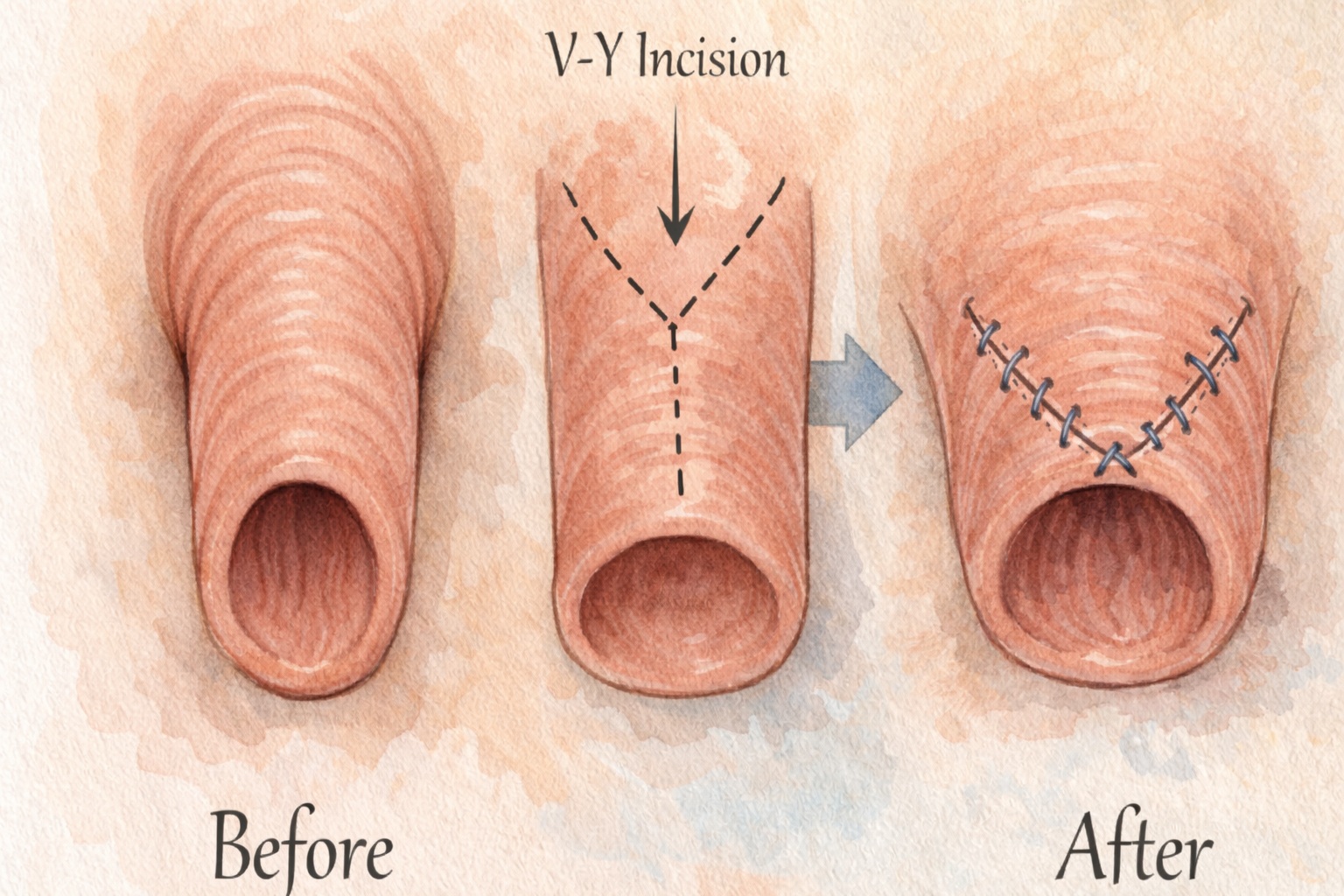
Figure 1. V-Y advancement flap (Preputioplasty) for tight foresking (phimosis).
Indications
Perputioplasy is indicated for adult men with a tight foreskin (phimosis) who are:
- Experiencing pain, hygiene difficulty, infections, sexual discomfort, or episodes of paraphimosis
- Interested in surgical options that preserve the foreskin
- Considering alternatives to circumcision
What is Phimosis?
Phimosis is a condition in which the foreskin cannot be comfortably retracted over the head of the penis (glans). It can occur at any age and may result from:
- Chronic inflammation or infection
- Scar formation (for example, after frenular surgery or repeated tearing)
- Dermatological conditions
- Long-standing tight foreskin
Phimosis can interfere with hygiene, sexual activity, and in some cases cause emergencies such as paraphimosis (a trapped retracted foreskin) [9,10].
Traditional Surgical Treatment: Circumcision
Circumcision completely removes the foreskin and reliably resolves phimosis. However:
- Some men wish to preserve the foreskin for personal, cultural, religious, or sexual reasons
- Circumcision permanently alters penile appearance and sensation
- Sexual function and sensitivity outcomes after circumcision remain debated in the literature [6–8]
As circumcision rates decline, interest in foreskin-preserving alternatives has increased.
What is Preputioplasty?
Preputioplasty is a foreskin-preserving surgical technique used to widen a tight foreskin rather than remove it.
It makes use of the VY advancement flap, a well-established surgical concept in which a tight ring or tube is widened by:
- Making a “Y” incision
- Closing it transversely (horizontally)
This converts length into width, relieving tightness [1].
How Preputioplasty Work
A Y incision incision is made through the tight band of outer foreskin on the dorsal (top) surface of the foreskin. This is then following by Horizontal closure where the incision is then closed side-to-side, which widens the opening.
This results in the foreskin opening becoming wider and more flexible whilst also remaining intact and functional.
Preputioplasty: What to Expect
Preputioplasty is a simple effective operation that takes 30-45minutes. It has the following advantages:
- Can be performed under local anaesthethic in the rooms without sedation.
- Median operative time: ~30-45 minutes
- Minimal blood loss: ~5 mL
- One or two small incisions depending on severity
Effectiveness and Outcomes
HMP has been found in a number of studies to be a safe and effective method of treating even very significant phimosis in patients trying to avoid circumcision.
Advantages of HMP
 Preserves the foreskin Maintains natural appearance Short operative time Low complication rate Can be adapted by community and academic urologists Suitable even for significant phimosis
Limitations and Considerations
- Not every case of phimosis is suitable (e.g., severe inflammatory skin disease)
- Small risk of scar formation (usually manageable)
- Long-term data are more limited compared with circumcision
- Surgeon experience matters
Your surgeon will assess whether HMP is appropriate for you.
Other Foreskin-Preserving Approaches
- Topical steroid therapy (often first-line, but not always effective in adults)
- Other forms of preputioplasty or limited reconstruction
- Techniques used in hypospadias and penile reconstruction have demonstrated that foreskin preservation is feasible and durable [3–5]
Making an Informed Choice
There is no single “right” option for every man. Surgical decisions should consider:
- Severity of symptoms
- Personal values and preferences
- Sexual, cultural, or cosmetic concerns
- Medical history and skin condition
HMP offers a balanced alternative for men who want symptom relief without circumcision.
Questions to Ask Your Surgeon
- Am I a candidate for preputioplasty?
- What are the risks in my specific case?
- What recovery and aftercare should I expect?
- How many foreskin-preserving procedures have you performed?
References
- Lumen N, et al. Ventral longitudinal stricturotomy and transversal closure: the Heineke-Mikulicz principle in urethroplasty. Urology (2010).
- Bonitz RP, et al. Correction of congenital penoscrotal webbing in children: a retrospective review of three surgical techniques. J Pediatr Urol (2016).
- Klijn AJ, et al. Results of preputial reconstruction in 77 boys with distal hypospadias. J Urol (2001).
- Pan P. Modified foreskin reconstruction versus circumcision in hypospadias repair. J Pediatr Urol (2020).
- Shoor G, et al. Outcomes of preputioplasty during TIP urethroplasty. J Pediatr Urol (2020).
- Morris BJ, et al. Effect of male circumcision on sexual function, sensation, and pleasure. Sex Med (2020).
- Fink KS, et al. Adult circumcision outcomes study. J Urol (2002).
- Friedman B, et al. Pros and cons of circumcision: an evidence-based overview. Clin Microbiol Infect (2016).
- Morris BJ, et al. Prevalence of phimosis in males of all ages. Urology (2020).
- Dubin J, et al. Penile emergencies. Emerg Med Clin North Am (2011).