
.
Our specialist surgeons are trained the surgical management of ingrown toenail.
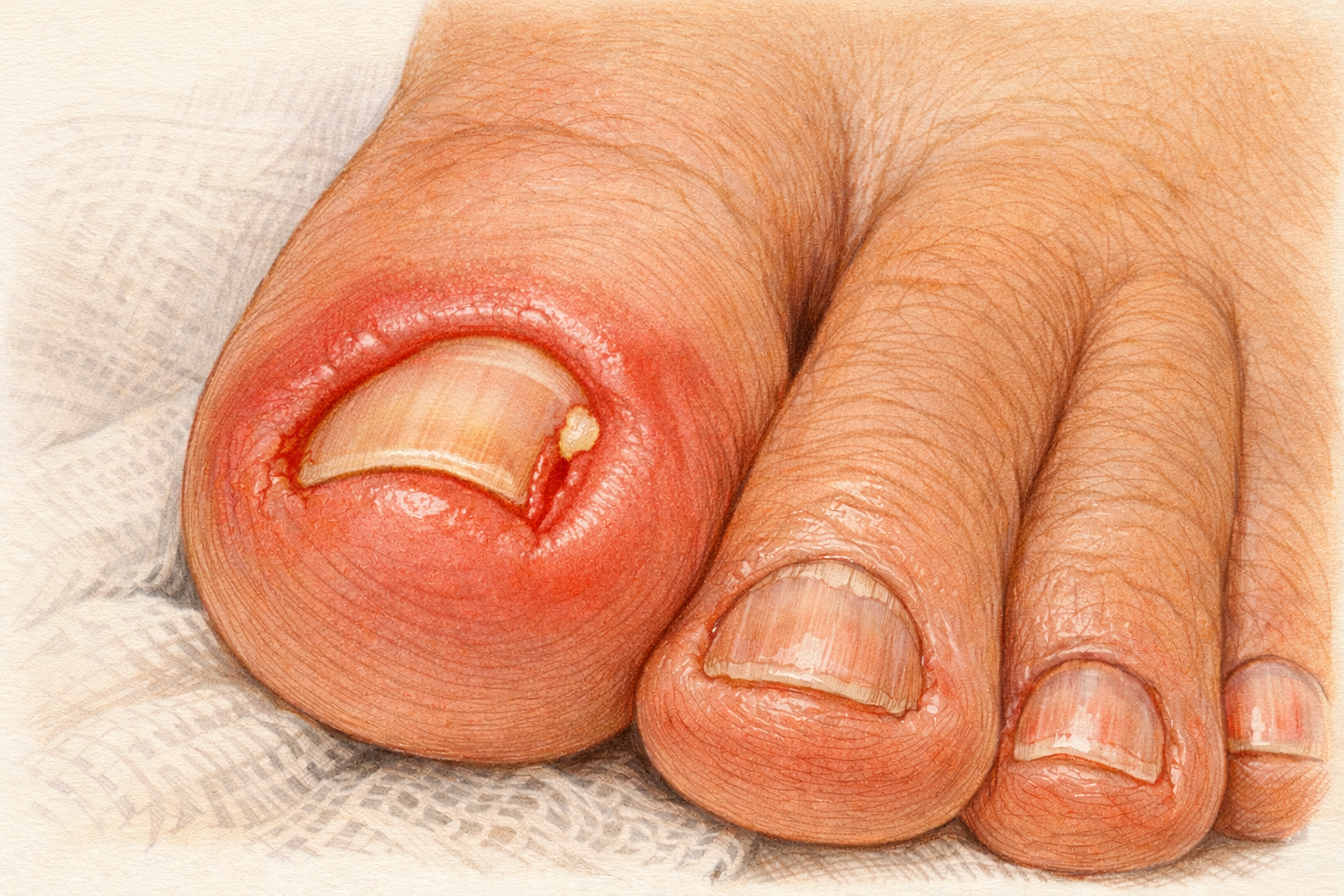
Figure 1. Ingrown toenail
What is an ingrown toenail?
An ingrown toenail occurs when the edge or corner of a toenail grows into the surrounding skin instead of over it. This most often affects the big toe.
What are the symptoms of an ingrown toenail?
When the nail presses into the skin, it can cause:
⦁ Pain and tenderness along the nail edge
⦁ Redness and swelling
⦁ Warmth
⦁ Infection (pus, drainage, worsening pain)
⦁ Overgrowth of skin around the nail (granulation tissue)
Common causes
⦁ Cutting nails too short or rounding the corners
⦁ Tight or narrow shoes
⦁ Repeated toe trauma (sports, running)
⦁ Naturally curved or thick nails
⦁ Poor foot hygiene
⦁ Genetic nail shape
When wedge resection surgery is required
Wedge resection (also called partial nail avulsion) involves removing only the problematic side of the nail, sometimes along with part of the nail matrix (the root) to prevent regrowth.
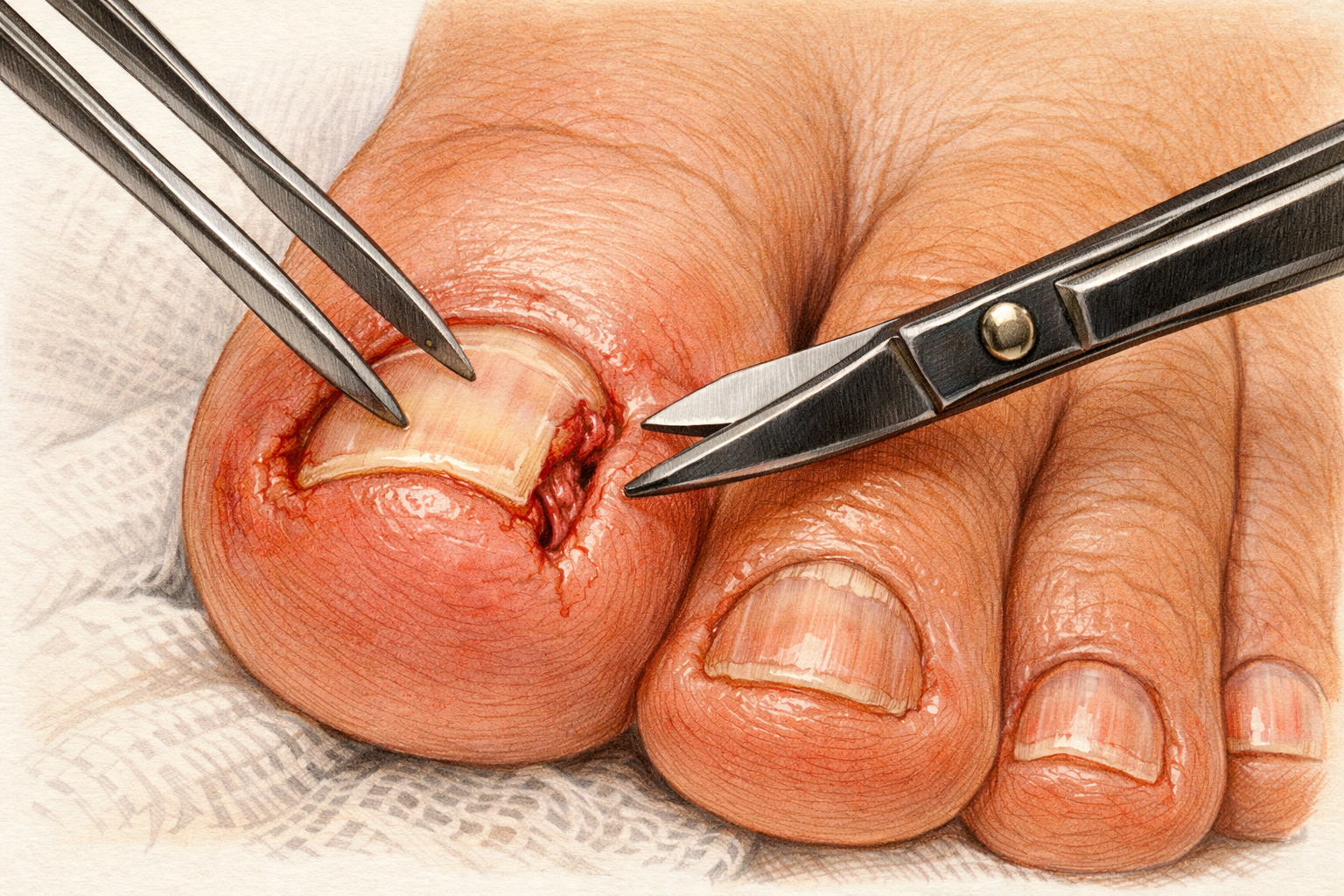
Figure 2. Wedges resection of ingrown toenail.
Surgery is usually recommended when:
⦁ Keeps coming back despite proper nail trimming and footwear changes
⦁ Moderate to severe symptoms
⦁ Significant pain interfering with walking or daily activities
⦁ Marked swelling, redness, or infection
⦁ Failure of conservative treatment
⦁ Soaks, antibiotics, proper nail care, cotton packing, or braces haven’t worked
⦁ Chronic infection or granulation tissue
⦁ Persistent pus, bleeding, or overgrown tissue at the nail edge
⦁ High-risk patients
⦁ People with diabetes, poor circulation, or immune suppression, where repeated infections can be dangerous